
How Does EtOH Affect the Liver? Stages of Alcohol-Related Damage and Recovery
TL;DR
EtOH (ethyl alcohol) is the alcohol in beer, wine, and liquor. The liver does most of the work of breaking it down, and that work can injure liver cells.
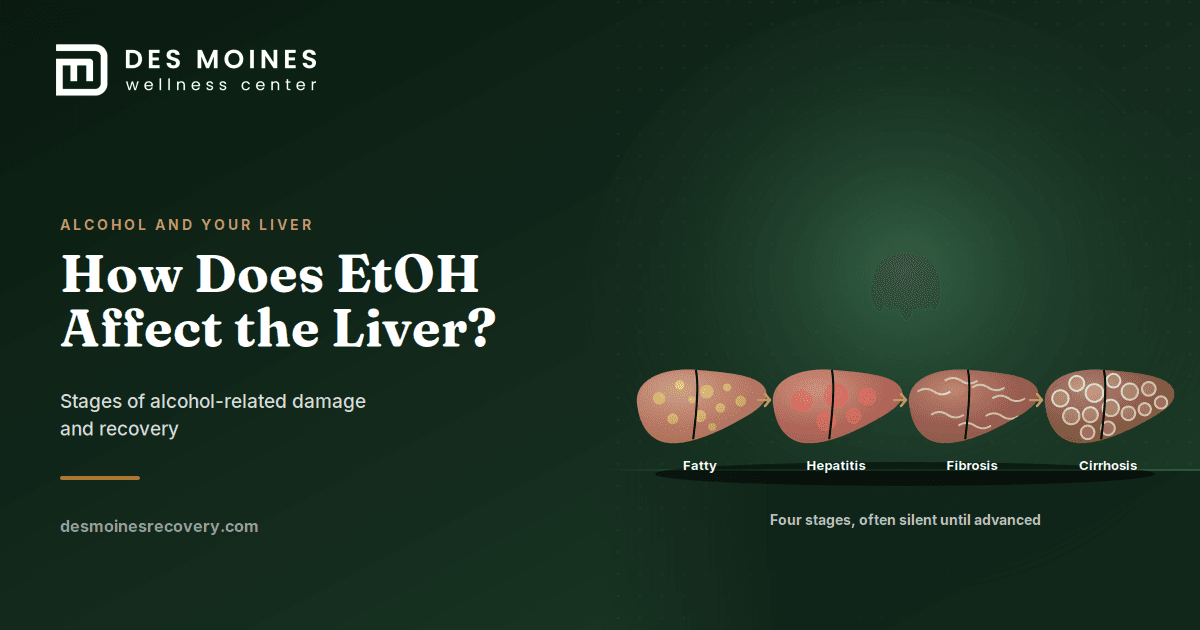
Alcohol-related liver damage moves through four general stages: fatty liver, alcohol-associated hepatitis, fibrosis, and cirrhosis.
The early stages are often silent. Many people feel fine until the damage is advanced.
Fatty liver can often reverse when drinking stops. Scarring is harder to undo, but stopping still protects the liver you have left.
If you already have liver damage, do not quit on your own. Withdrawal can be dangerous and should be medically supervised.
Table of Contents
Introduction
Maybe your liver numbers came back high at a checkup, or someone you love looks more tired and yellow than they used to. Either way, you want to know what EtOH is doing inside the body, and whether it can be undone.
The short answer is that the liver is tough, and it is also easy to overwork. This article walks through the four stages of alcohol-related liver damage, the signs to watch for, and what recovery realistically looks like. It is general information, not a diagnosis. Only a doctor who examines you and orders tests can tell you where your liver stands.
What is EtOH and how does the liver process it?
EtOH is the chemical shorthand for ethyl alcohol, also called ethanol. It is the same alcohol in beer, wine, and liquor. Hospital charts and lab reports often use "EtOH" because it is short, which is why many people first meet the term there.
When you drink, EtOH is absorbed into the blood and carried to the liver. The liver breaks it down in steps. The first step turns EtOH into acetaldehyde, a toxic compound that can injure liver cells and cause inflammation. The liver then converts acetaldehyde into a less harmful substance that the body clears.
The trouble is volume and repetition. The liver can only process so much EtOH at a time, and heavy or frequent drinking keeps it working without a break. Over months and years, that strain can build up as fat, inflammation, and scar tissue.
SAMHSA runs a free, confidential National Helpline for anyone with questions about alcohol or drug use. It is a reasonable first call if you are unsure where to start.[1]

Stage 1: Fatty liver (steatosis)
Fatty liver is the earliest stage. Fat collects inside liver cells because the liver is busy handling EtOH and cannot manage fat the usual way. It can develop after even a few days of heavy drinking.
Most people have no symptoms at all. Some feel a dull ache in the upper right belly or an unusual tiredness, but many find out only through a blood test or an ultrasound.
This is also the stage with the best odds of reversal. If EtOH intake stops, the fat can clear from the liver in a matter of weeks in many cases. That is why early screening matters.
Stage 2: Alcohol-associated hepatitis
Hepatitis means inflammation of the liver. In alcohol-associated hepatitis, EtOH and its byproducts have injured liver cells enough to cause swelling and cell death. It is not the same as a viral hepatitis infection, though some symptoms overlap.
Mild cases may cause nausea, loss of appetite, and low-grade fever. Severe cases can cause jaundice (yellowing of the skin and eyes), belly swelling, confusion, and bleeding problems. Severe alcohol-associated hepatitis is a medical emergency that usually needs hospital care.
It often shows up in people who have been drinking heavily for years, but it can appear after a period of especially heavy drinking. Stopping EtOH completely is the most important step in treating it.

Stage 3: Fibrosis and Stage 4: Cirrhosis
When inflammation keeps happening, the liver tries to repair itself by laying down scar tissue. Early scarring is called fibrosis. The liver still works fairly well at this point, and the scarring can sometimes stop or partly improve if the cause is removed.
Cirrhosis is advanced scarring. The liver becomes hard and lumpy, blood has trouble flowing through it, and the organ loses its ability to filter toxins, make proteins, and help with clotting. Cirrhosis can lead to fluid buildup in the belly, internal bleeding, confusion from toxins reaching the brain, and liver cancer.
The table below summarizes the four stages in plain terms.
Stage | What is happening | Typical symptoms | Can it reverse? |
|---|---|---|---|
1. Fatty liver | Fat builds up in liver cells | Often none | Often yes, if drinking stops |
2. Alcohol-associated hepatitis | Inflammation and cell injury | Nausea, jaundice, belly pain, fever | Can improve, but severe cases are life-threatening |
3. Fibrosis | Early scar tissue forms | Usually none or mild | May stop or partly improve |
4. Cirrhosis | Extensive, permanent scarring | Fluid in belly, confusion, bleeding, jaundice | Scarring is not reversed, but stopping EtOH can prevent further harm |
These stages can overlap, and a person does not always move through them in a neat line. A doctor may use blood tests, imaging, or a specialized scan to estimate how much scarring is present.

Warning signs of alcohol-related liver damage
The early signs are quiet. By the time symptoms are obvious, damage may be well along. Watch for these:
Constant tiredness or weakness that does not improve with rest
Nausea, poor appetite, or unexplained weight loss
Pain or fullness in the upper right side of the belly
Yellow skin or eyes (jaundice)
Dark urine or pale stools
Swelling in the legs, ankles, or belly
Easy bruising or bleeding
Confusion, memory trouble, or unusual sleepiness
Yellow skin, vomiting blood, black stools, or sudden confusion need emergency care. Call 911 or go to the nearest emergency room.
If you drink regularly and are wondering whether it has gone too far, our post on 5 signs it's time to seek help covers the behavioral side. For liver concerns specifically, a primary care visit and a simple blood panel are a good start.

Can the liver heal? Recovery after quitting EtOH
The liver can regenerate. Given time without EtOH, liver cells can regrow and fat can clear. That is why fatty liver and early inflammation have the best outlook.
Recovery gets harder as scarring builds. Cirrhosis does not simply disappear. Still, people with cirrhosis who stop drinking generally do better than those who keep going, and stopping can slow or prevent further damage. A liver specialist can tell you what to expect in your case.
Quitting is not only a liver question, though. It is also a treatment question. ASAM, the American Society of Addiction Medicine, publishes evidence-based guidelines that treatment providers use to build care plans for people with addiction and related health conditions.[2] Our post on therapies and medications for alcohol use disorder goes through those options in detail.
One safety point deserves its own line. If you drink heavily, stopping suddenly can cause seizures and other serious withdrawal symptoms, and a damaged liver makes that riskier. Plan the first days with medical help. Our guide to how long alcohol withdrawal lasts explains what to expect.
NIDA, the National Institute on Drug Abuse, also points people to the SAMHSA Treatment Locator and the 1-800-662-HELP (4357) line for finding treatment.[3]

Getting help at Des Moines Wellness Center
Des Moines Wellness Center treats alcohol use at every level of need. Care often begins with medical detox, where staff monitor you through withdrawal. That matters most when the liver is already under strain.
From there, the right level depends on your health and your home life. Options include residential inpatient care, an intensive outpatient program, standard outpatient treatment, and virtual outpatient care. If you are weighing these, see our comparison of inpatient and outpatient rehab.
Many people who drink heavily are also dealing with depression, anxiety, or trauma. Our dual diagnosis program treats both together. After treatment, aftercare and alumni support helps you stay on track. If you are comparing programs, our 9 questions to ask before you commit can help.
Frequently Asked Questions
Q: What does EtOH mean, and is it the same as the alcohol in beer, wine, and liquor?
A: EtOH is shorthand for ethyl alcohol, also called ethanol. Yes, it is the same alcohol in beer, wine, and liquor. Only the amount differs from drink to drink, and the liver processes the EtOH the same way whatever you drink.
Q: How much alcohol does it take to damage the liver?
A: There is no single number that fits everyone. Risk depends on how much you drink, how often, for how long, your sex, your body weight, your genes, and other conditions such as hepatitis or obesity. Fat can build up in the liver after a short stretch of heavy drinking, and the risk of scarring rises with years of regular heavy use. A doctor can give you advice based on your own history.
Q: Can the liver repair itself if I stop drinking?
A: Often, yes, in the early stages. Fatty liver can clear within weeks of stopping EtOH, and inflammation can calm down. Advanced scarring (cirrhosis) is not reversed, but stopping can prevent more damage and improve your outlook.
Q: What are the early symptoms of alcohol-related liver disease?
A: Often there are none. When symptoms appear, they tend to be tiredness, nausea, poor appetite, and a dull ache in the upper right belly. Jaundice, swelling, and confusion usually mean the disease is more advanced. Blood tests can catch problems before you feel anything.
Q: Is it safe to quit drinking suddenly if I already have liver damage?
A: Not without medical help. Stopping abruptly after heavy, regular drinking can cause seizures, severe confusion, and other dangerous withdrawal symptoms, and liver damage can make these harder to manage. Talk with a doctor or a medical detox program first. You can also call the SAMHSA National Helpline at 1-800-662-4357 for free, confidential guidance.[1]
Conclusion
EtOH harms the liver in stages, from fat to inflammation to scarring, and the early stages are quiet. The earlier you stop, the more of your liver you can protect, and in many cases the early damage can heal.
If you are worried about your own drinking or someone else's, you do not have to sort it out alone. Call Des Moines Wellness Center. Our team will talk through your situation, explain your options, and help you plan a safe way to stop EtOH use. If it is an emergency, call 911.
References
Substance Abuse and Mental Health Services Administration. National Helpline for Mental Health, Drug, Alcohol Issues. https://www.samhsa.gov/find-help/national-helpline
American Society of Addiction Medicine. ASAM - American Society of Addiction Medicine. https://www.asam.org
National Institute on Drug Abuse. NIDA.NIH.GOV | National Institute on Drug Abuse (NIDA). https://nida.nih.gov