
What to Pack (and Leave Home) for Inpatient Drug Rehab in Des Moines, Iowa
TL;DR
Bring a photo ID, insurance card, and a current list of your medications. Pack about 7 to 10 days of clothing and plan to do laundry.
Leave home alcohol-based products, anything with drugs or paraphernalia, weapons, and valuables. Ask the admissions team before bringing electronics.
Medications usually need to be in original pharmacy bottles. Do not stop or change a prescription on your own before you arrive.
Sort out work, children, pets, bills, and rides before admission day so you can focus on treatment.
If you are unsure about any item, call and ask. No one will think less of you for it.
Table of Contents
What to expect when you enter inpatient drug rehab in Des Moines, Iowa
Getting your life in order before you go: work, family, and finances
Introduction
You have decided to go. Now there is a suitcase on the bed, and you have no idea what belongs in it. That is a normal place to be stuck, and it is a small problem you can solve in an afternoon.
This guide covers what to pack for inpatient drug rehab in Des Moines, Iowa, what to leave behind, and how to get your home life settled first. Rules differ from one program to the next, so treat this as a starting point and confirm details with the facility. If you are still deciding whether residential care is the right fit, our post on inpatient vs. outpatient drug rehab in Des Moines covers that choice.
What to expect when you enter inpatient drug rehab in Des Moines, Iowa
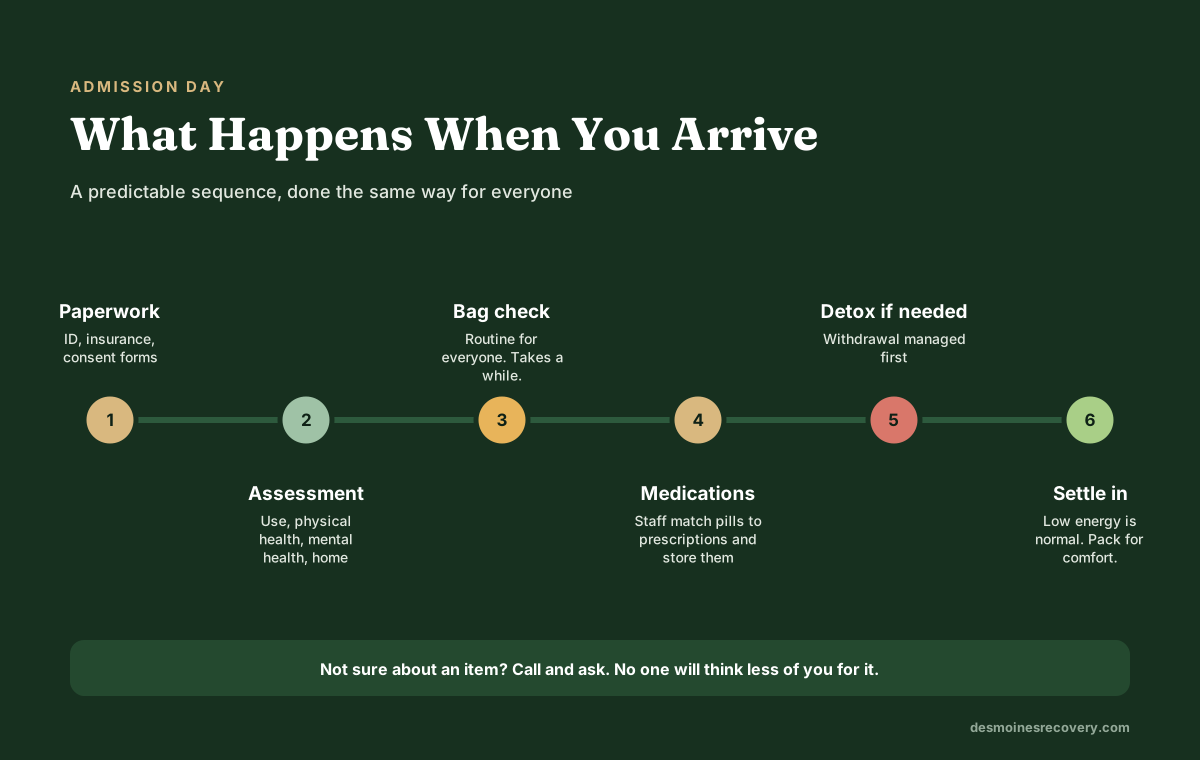
Admission day starts with paperwork and an assessment. A clinician asks about your substance use, your physical health, your mental health, and your home situation. Programs that follow The ASAM Criteria use this kind of assessment to build an individualized treatment plan and match you to the right level of care.[1]
Staff will also go through your bags. This is routine, it is done for everyone, and it keeps the building safe for every person in it. Expect it to take a while, and expect staff to be kind about it.
If you need to withdraw from a substance first, you may begin in medical detox and move into residential inpatient care afterward. You will likely have little energy early on, so pack for comfort. For a sense of how long each stage lasts, see our drug rehab timeline guide.
Essential documents, medications, and paperwork to bring
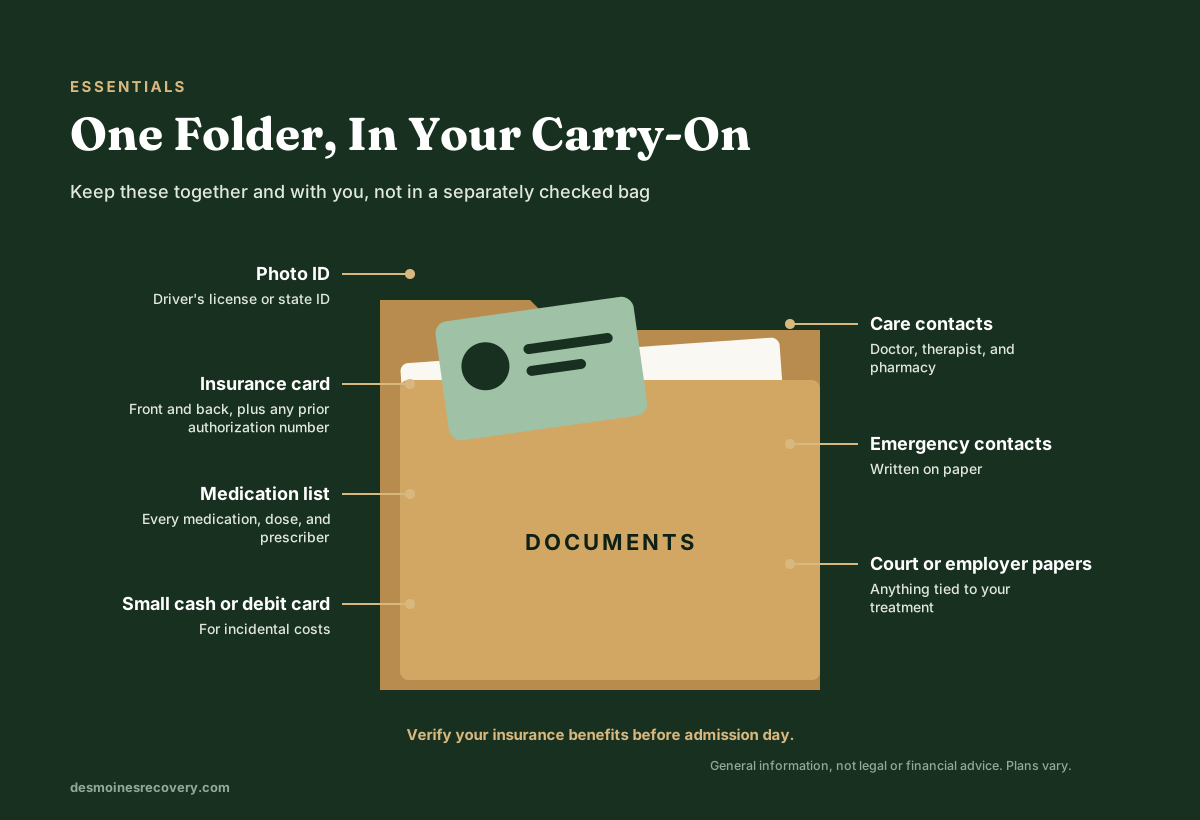
Put these in one folder or zip pouch and keep it in your carry-on bag, not in a suitcase that gets checked in separately.
Government-issued photo ID (driver's license or state ID)
Health insurance card, front and back, plus any prior authorization number
A written list of every medication you take, with doses and the name of each prescriber
Names and phone numbers of your doctor, therapist, and pharmacy
Emergency contacts, written on paper
Any court, probation, or employer paperwork tied to your treatment
A small amount of cash or a debit card for incidental costs
Not sure how your plan treats residential care? Verify benefits before admission. Our guide on how to verify insurance for rehab in Des Moines walks through it.
Prescription medications
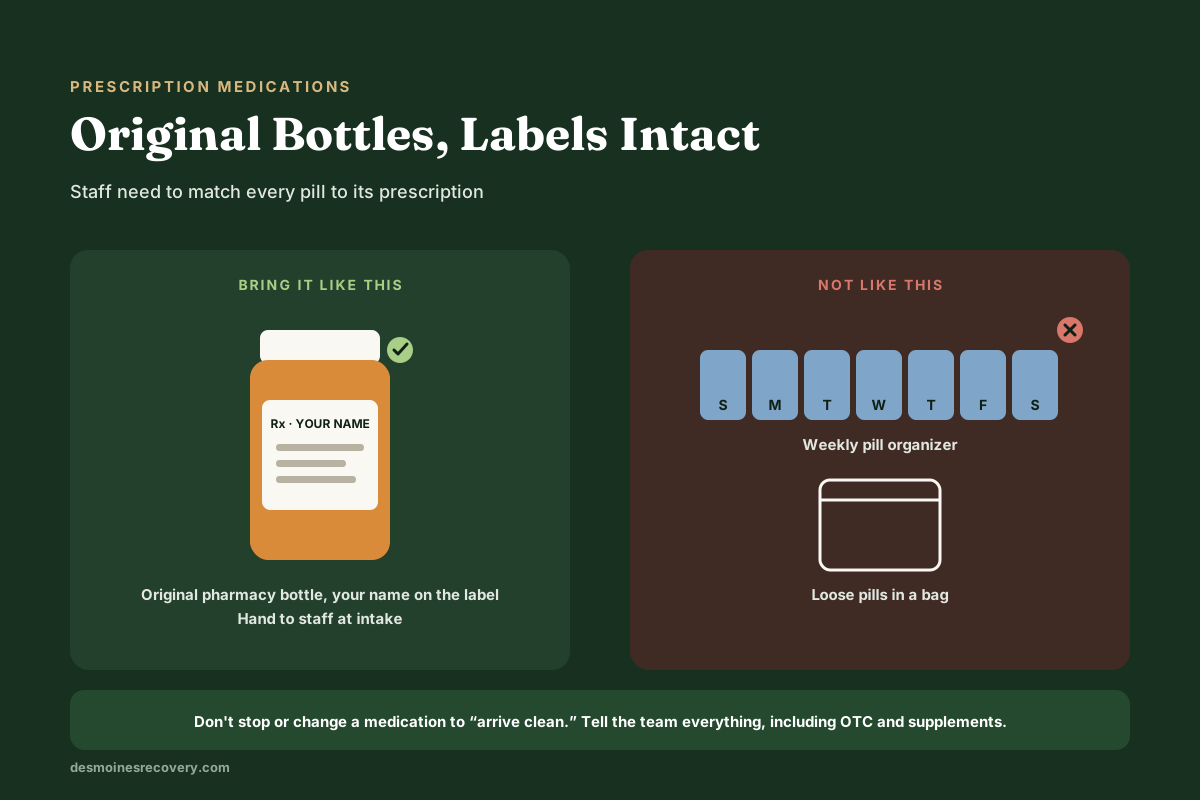
Bring prescriptions in their original pharmacy bottles with your name and the label intact. Do not move pills into a weekly organizer or a baggie. Staff need to match each pill to a prescription, and they will usually take over storing your medications and giving you your doses.
Do not stop or change a medication on your own to "arrive clean." Tell the clinical team about everything you take, including over-the-counter products and supplements. Some medicines are controlled substances, which the DEA classifies into schedules by abuse potential.[2] Your team will decide how each one is handled. If you have leftover pills at home you no longer need, the DEA lists year-round disposal locations on its Diversion Control Division site.[2]
If you have a mental health diagnosis alongside substance use, say so at intake. Our dual diagnosis program treats both at once.
Clothing and personal items: a practical packing list
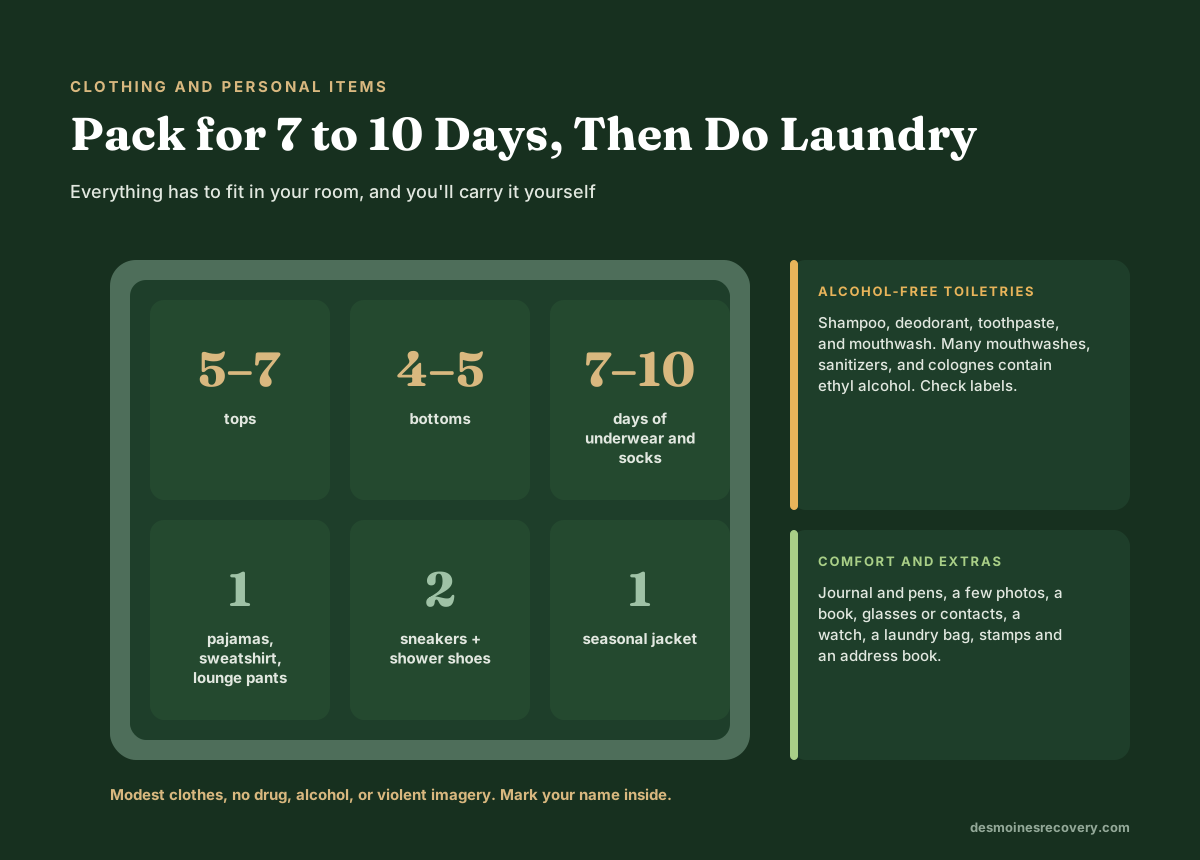
Pack light and plan to do laundry. Most people do well with about 7 to 10 days of clothes. Everything you bring has to fit in your room, and you will carry it yourself.
Category | What to bring |
|---|---|
Everyday clothes | 5 to 7 tops, 4 to 5 bottoms, underwear and socks for 7 to 10 days |
Sleep and lounge | Pajamas, a sweatshirt, comfortable pants |
Footwear | Sneakers, slip-on shoes or sandals for the shower |
Outerwear | A jacket suited to the season, plus a hat and gloves in winter |
Toiletries | Alcohol-free versions of shampoo, deodorant, toothpaste, and mouthwash |
Comfort items | A journal and pens, a few photos, a book, a small blanket or pillow if allowed |
Extras | Glasses or contacts, a watch, a laundry bag, stamps and an address book |
Choose clothes that are modest and free of drug, alcohol, or violent imagery. Skip anything you would hate to lose. Mark your name inside items if you can.
Alcohol-free matters more than people expect. Many mouthwashes, hand sanitizers, and colognes contain ethyl alcohol, and programs typically ban them. Check labels before you pack.
What to leave home: prohibited and restricted items
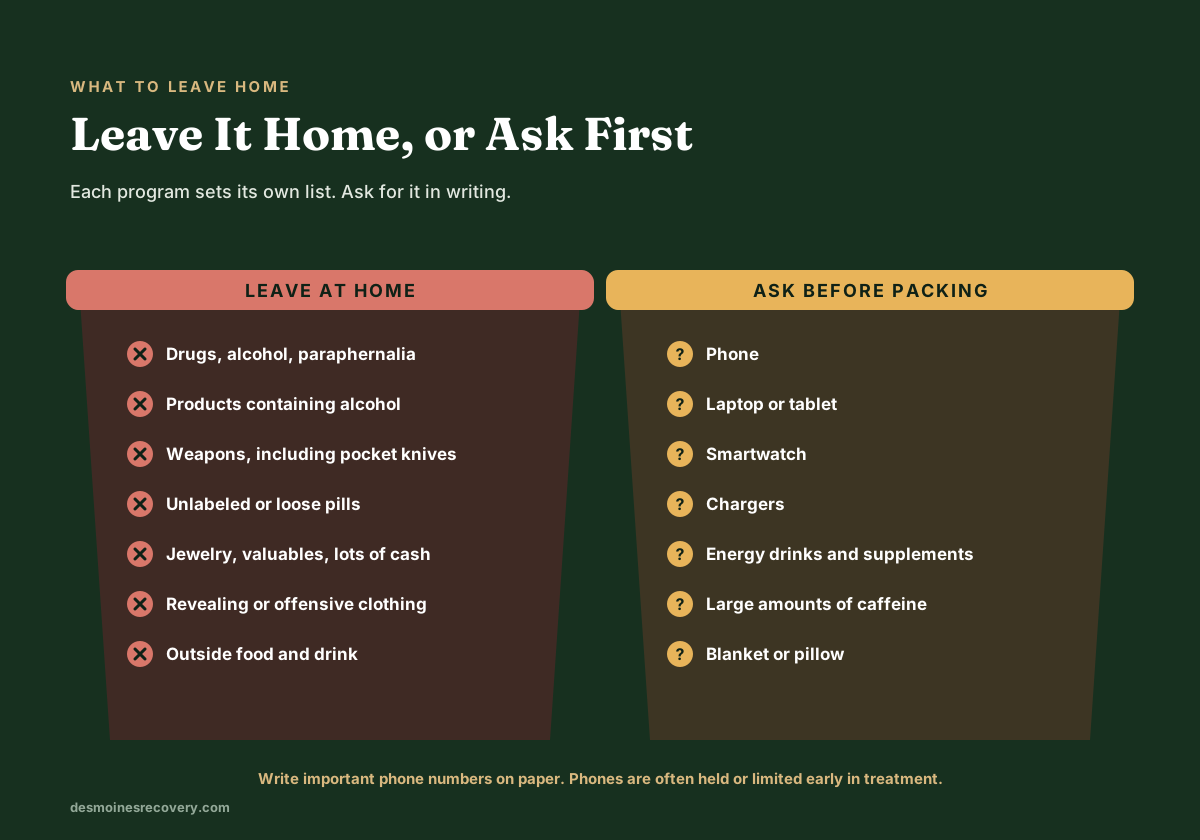
Each program sets its own list, so ask for ours in writing. These items are almost always banned or limited at inpatient drug rehab in Des Moines, Iowa and elsewhere.
Drugs, alcohol, and paraphernalia of any kind
Products containing alcohol, such as some mouthwashes, perfumes, and sanitizers
Weapons, including pocket knives
Medications not in original containers, or any pills you cannot identify
Energy drinks, certain supplements, and sometimes caffeine in large amounts
Revealing or offensive clothing
Jewelry, large amounts of cash, and other valuables
Outside food and drink
Phones, laptops, and other electronics
Policies vary widely. Some programs hold phones during the first days or limit use to set hours so you can focus on treatment. Ask before you pack a laptop, tablet, or smartwatch. Bring a charger only if you are told you can.
Write down the phone numbers you will want, because your contacts may not be reachable. If you ever feel unsafe or in crisis, SAMHSA's National Helpline is available for treatment referral and information.[3]
Preparing for Iowa weather and daily life at treatment
Iowa weather swings hard. Winters are cold and windy, summers are humid, and spring and fall can bring several seasons in one week. Pack layers: a light jacket, a warm coat in winter, and a rain layer in spring.
Days in residential care follow a schedule. A typical day includes group therapy, individual sessions, meals, free time, and often time outdoors. Comfortable shoes and weather-appropriate outerwear make that routine easier.
Treatment is hard work. Pack a few things that help you rest, like a journal or a book. Early on, your brain and body are still adjusting, and it helps to learn what the brain is doing in recovery. The NIAAA's Core Resource on Alcohol covers the neuroscience of addiction and recovery for clinicians and is a useful read if you want to understand the process.[4]

Getting your life in order before you go: work, family, and finances
Handle the practical pieces first so they are not on your mind in group. Start with work. You may have leave rights, and our article on keeping your job during rehab and FMLA rights explains how to ask for time off.
Work: Ask HR about leave and what they need from the facility.
Children and dependents: Name a caregiver and write down school, medical, and pickup details.
Pets: Arrange boarding or a trusted friend.
Bills: Set up autopay for rent, utilities, and car payments.
Transportation: Line up a ride to admission. Do not drive yourself if you are impaired.
Home: Remove alcohol and drugs from your living space, or ask someone to do it.
If you are still weighing programs, 9 questions to ask before choosing a rehab center can help you compare.
How family and loved ones can help with the transition
If you are the family member, your job on admission day is to be steady and calm. Drive the person there, carry a bag, and say something simple like "I'm proud of you." Save hard conversations for family sessions.
You can also help ahead of time. Gather the documents together, call the facility with questions, and check labels on toiletries. Take the pressure off by handling child care and pet care yourself.
After the first days, ask the staff how to stay in touch and when visits begin. Many programs hold family education sessions. Stay involved after discharge, too. Recovery continues through aftercare and alumni support, and step-down options include intensive outpatient, outpatient, and virtual outpatient care.
If alcohol is part of the picture, learn the warning signs of serious withdrawal first. Our guide to how long alcohol withdrawal lasts explains when to seek emergency care.
Frequently Asked Questions
Q: What should I pack for inpatient drug rehab in Des Moines, Iowa?
A: Bring a photo ID, your insurance card, a written medication list, 7 to 10 days of comfortable clothes, alcohol-free toiletries, and a few personal comfort items like a journal. Confirm the exact list with the facility before you pack.
Q: What items are not allowed in inpatient rehab?
A: Drugs, alcohol, paraphernalia, weapons, and products containing alcohol are almost always banned. Many programs also restrict valuables, outside food, energy drinks, and clothing with offensive imagery. Ask for the written list.
Q: Can I bring my prescription medications to rehab, and how should they be packaged?
A: Usually yes, if they are prescribed to you. Keep them in original pharmacy bottles with your name on the label, and give them to staff at intake. Do not use pill organizers or loose pills, and do not stop a medication on your own beforehand.
Q: Can I bring my cell phone, laptop, or other electronics to treatment?
A: It depends on the program. Many limit or hold phones early in treatment, and laptops and smartwatches are often restricted. Ask before admission and write down important phone numbers on paper.
Q: How much clothing should I bring, and should I pack for Iowa's seasonal weather?
A: Pack 7 to 10 days of clothes and plan to do laundry. Iowa's weather changes quickly, so bring layers: a warm coat, hat, and gloves in winter, and a light jacket and rain layer in spring and fall.
Conclusion
Packing for inpatient drug rehab in Des Moines, Iowa comes down to a short list: your documents, your medications in their original bottles, simple clothes, and alcohol-free toiletries. Leave the rest at home, and handle work, family, and bills before you go.
If you have questions about what to bring, call Des Moines Wellness Center. Our admissions team can walk you through our current rules and help you plan your arrival day. You can also learn about our residential inpatient program at desmoinesrecovery.com.
References
American Society of Addiction Medicine. ASAM Criteria. - https://www.asam.org/asam-criteria
U.S. Department of Justice, DEA Diversion Control Division. Home. - https://www.deadiversion.usdoj.gov
SAMHSA. National Helpline for Mental Health, Drug, Alcohol Issues. - https://www.samhsa.gov/find-help/national-helpline
National Institute on Alcohol Abuse and Alcoholism. Core Resource on Alcohol. - https://www.niaaa.nih.gov/health-professionals-communities/core-resource-on-alcohol